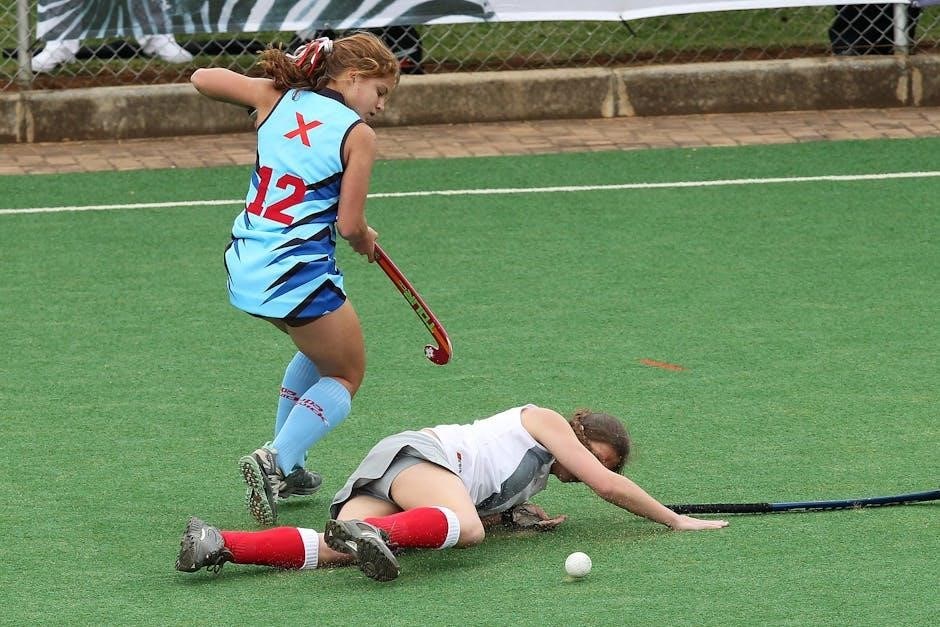
Field hockey stick length is a crucial element‚ impacting performance and player comfort; selecting the right size enhances control‚ power‚ and overall gameplay effectiveness.
Why Stick Length Matters
Optimal stick length directly influences a player’s ability to effectively control the ball‚ execute passes‚ and shoot with accuracy and power. A stick that is too long can feel unwieldy and difficult to maneuver‚ hindering quick movements and precise ball handling. Conversely‚ a stick that is too short limits a player’s reach and can compromise their shooting range and defensive capabilities.
Correct length promotes proper technique‚ enabling players to maintain a balanced stance and generate maximum force during strikes. It also minimizes strain on the body‚ reducing the risk of injury. Furthermore‚ appropriate stick length contributes to improved spatial awareness and quicker reactions on the field‚ ultimately enhancing overall performance and contributing to team success.
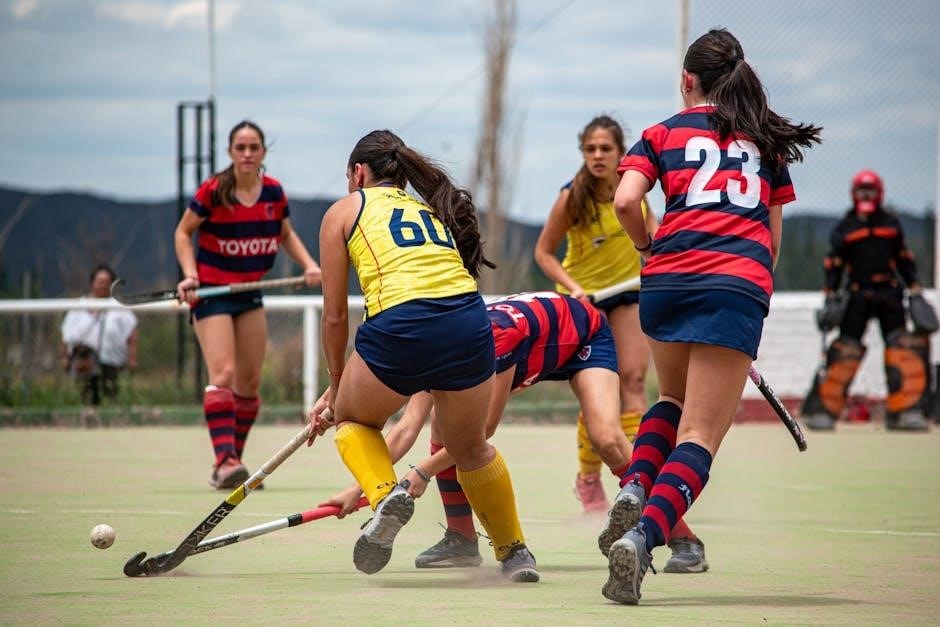
Determining Your Ideal Stick Length
Finding the perfect fit involves utilizing established methods like the heel test and in-hand assessment‚ ensuring optimal control and comfort for peak performance.
The Heel Test: A Primary Method
The heel test remains a cornerstone for determining appropriate field hockey stick length. Stand with your hockey shoes on‚ placing the stick beside you. Position the stick vertically‚ and extend your arm down the shaft as if stopping a ball.
Ideally‚ the top of the stick should reach your wrist bone. If it extends significantly higher‚ the stick is likely too long‚ hindering maneuverability and control. Conversely‚ if it falls short‚ the stick may be too short‚ limiting reach and power.
This test provides a solid starting point‚ but individual preferences and playing style should also be considered. Minor adjustments can be made based on comfort and feel during practice. Remember to always prioritize a comfortable and controlled stance.
The In-Hand Test: Quick Assessment
The in-hand test offers a rapid‚ preliminary assessment of field hockey stick length suitability. While wearing your hockey shoes‚ hold the stick as you would during a typical game stance – slightly angled forward.
Observe the distance between the top of the stick and the floor when held in this position. A general guideline suggests the stick’s height should allow for a comfortable bend in your front arm‚ without excessive reaching or strain.
This quick check helps identify sticks that are drastically incorrect in length. It’s best used as a first filter before employing the more precise heel test. Remember‚ this is a subjective assessment; prioritize a comfortable grip and natural feel. It’s a good starting point for narrowing down options.
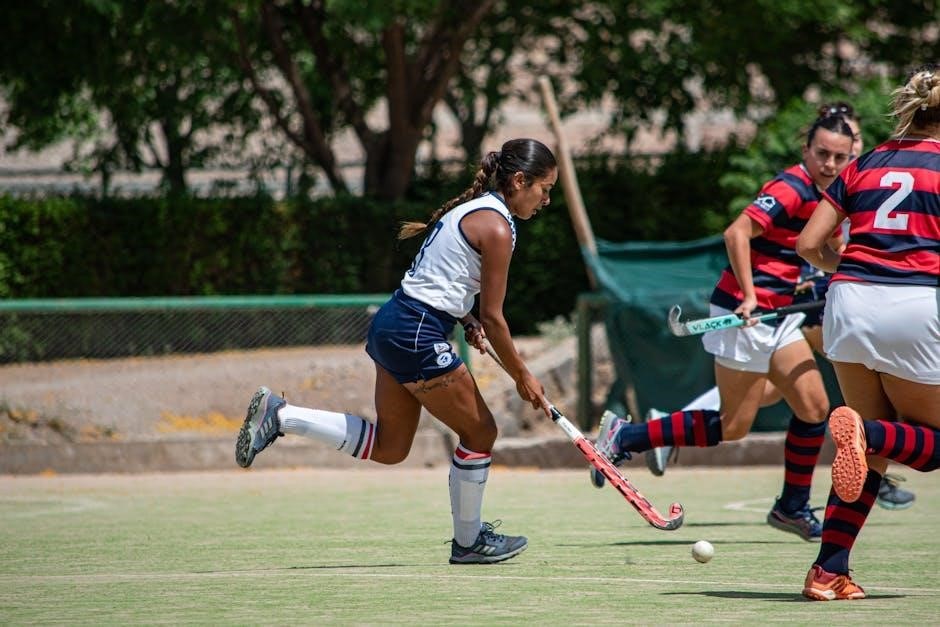
Stick Length Guidelines by Player Height
Player height significantly influences optimal stick length; these guidelines provide a starting point‚ but individual preference and playing position are also vital considerations.
Stick Length for Players Under 5’0″
For players under 5’0″‚ selecting the correct stick length is paramount for developing fundamental skills and maintaining proper technique. Typically‚ a stick length in the 24-26 inch range is recommended. This shorter length allows for greater control and maneuverability‚ crucial for younger or smaller athletes still building strength and coordination. It’s essential to ensure the stick isn’t too long‚ as this can lead to poor posture and difficulty with ball control.
The goal is to find a length where the player can comfortably maintain a slight bend in their knees while holding the stick in a playing position. A stick that’s too short will restrict reach‚ while one that’s too long will hinder agility. Prioritize a stick that feels balanced and allows for quick‚ precise movements. Regular assessment as the player grows is vital to ensure the stick remains appropriately sized.
Stick Length for Players 5’0″ ⏤ 5’3″
Players between 5’0″ and 5’3″ generally find a stick length of 26-28 inches to be most suitable. This range provides a balance between control and reach‚ allowing for effective dribbling‚ passing‚ and shooting. It’s important to consider the player’s individual build and skill level when making a final decision. A slightly shorter stick within this range might be preferable for players prioritizing agility and close control‚ while a slightly longer stick could benefit those focusing on powerful shots and longer passes.
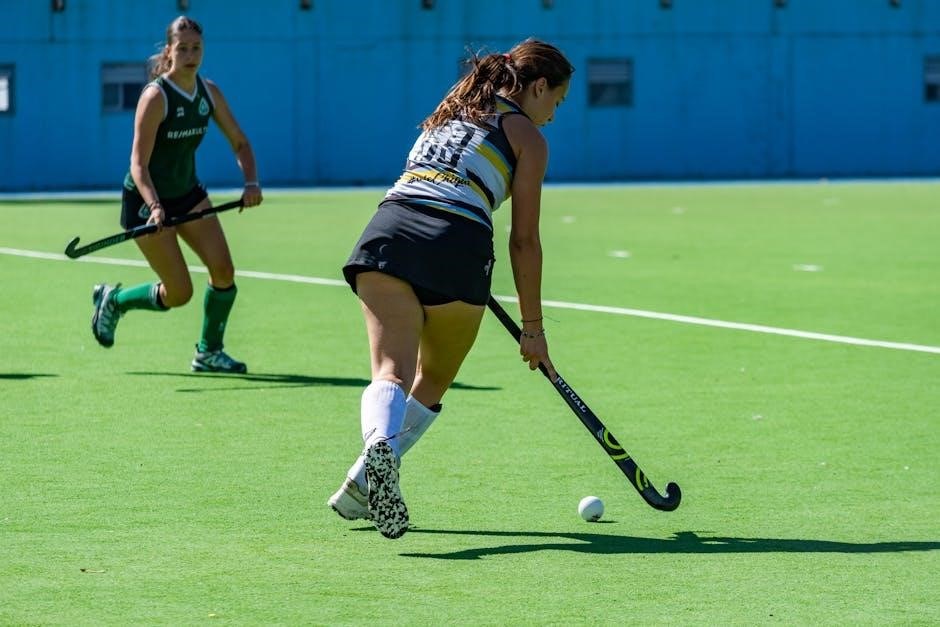
The “heel test” is particularly useful for this height group – ensuring a comfortable bend in the knees when the stick is positioned upright. Proper fit prevents strain and promotes efficient technique. Regularly re-evaluating stick length as the player develops is crucial for continued optimal performance and injury prevention.
Stick Length for Players 5’4″ ─ 5’7″
For players ranging from 5’4″ to 5’7″‚ a field hockey stick length of 28-30 inches is typically recommended. This provides a good compromise between maneuverability and the ability to generate power. Players within this height bracket often benefit from a stick that allows for a comfortable reach during both defensive and offensive plays. Consider the player’s primary position; a forward might lean towards the shorter end of the range for quicker stick work‚ while a defender might prefer a slightly longer stick for extended reach.
The in-hand test‚ checking for a comfortable grip and balance‚ is vital. Ensuring the stick doesn’t feel too heavy or unwieldy is key. Regular assessment is important as players grow and their skills evolve‚ maintaining optimal performance and minimizing potential strain;
Stick Length for Players 5’8″ ─ 6’0″
Players between 5’8″ and 6’0″ generally find a stick length of 30.5 to 32 inches most suitable. This range accommodates their longer reach and allows for effective ball control and powerful shots. A properly sized stick enables a more natural playing posture‚ reducing strain and maximizing efficiency on the field. It’s crucial to consider individual playing style and position when selecting within this range.
Midfielders often prefer a stick closer to 31 inches for versatility‚ while defenders might opt for 32 inches for greater reach during tackles and interceptions. The heel test remains a valuable tool‚ ensuring the stick allows for a comfortable bend and optimal control. Regular evaluation is essential as skills develop.
Stick Length for Players Over 6’0″
For players exceeding 6’0″ in height‚ a field hockey stick length of 32.5 to 34 inches is typically recommended. This extended length compensates for their greater stature‚ ensuring comfortable handling and effective reach during gameplay. Maintaining proper form and control is paramount‚ and a longer stick facilitates this by allowing a more natural bend and swing.
Defenders and midfielders in this height bracket often benefit from the maximum length of 34 inches‚ providing an advantage in tackling and intercepting passes. However‚ individual preference and playing style should always be considered. The heel test is vital to confirm the stick allows for a comfortable and controlled playing position‚ preventing strain and maximizing performance.
Stick Length and Playing Position
Playing position significantly influences optimal stick length; forwards often prefer shorter sticks for maneuverability‚ while defenders benefit from extended reach and power.
Stick Length for Forwards
Forwards generally require shorter sticks‚ typically ranging from 28.5 to 32 inches‚ to facilitate quick movements‚ close ball control‚ and rapid shooting in the attacking circle. This length allows for nimble dribbling‚ swift changes in direction‚ and efficient execution of complex skills near the goal. A shorter stick enhances a forward’s ability to react quickly to defensive pressure and create scoring opportunities.
However‚ individual preference and playing style also play a role. Agile forwards who rely heavily on close control might opt for the shorter end of the range‚ while those who prefer powerful slaps shots may choose a slightly longer stick. It’s crucial to find a balance between maneuverability and hitting power to maximize effectiveness in the forward line. Proper stick length empowers forwards to excel in offensive plays.
Stick Length for Midfielders
Midfielders typically utilize a medium stick length‚ generally between 30.5 and 34 inches‚ as they require versatility for both defensive and offensive duties. This length provides a balance between control for intricate passing and dribbling‚ and power for long-range distribution and tackling. Midfielders need to effectively transition between winning possession and initiating attacks‚ demanding a stick that supports both skillsets.
The ideal length depends on the midfielder’s specific role – a more defensive midfielder might prefer a slightly longer stick for greater reach and tackling ability‚ while an attacking midfielder may favor a shorter stick for quicker ball manipulation. Finding the right balance is key to excelling in this demanding position‚ enabling effective playmaking and overall field control.
Stick Length for Defenders
Defenders generally benefit from longer stick lengths‚ typically ranging from 34 to 36.5 inches‚ to maximize reach during tackles and interceptions. This extended length provides a significant advantage in disrupting opposing attacks and shielding the goal. A longer stick allows defenders to cover more ground and effectively close down passing lanes‚ making it harder for opponents to penetrate the defensive line.
However‚ maintaining control with a longer stick is crucial; defenders must still be able to maneuver effectively and execute accurate passes. The ideal length balances reach with maneuverability‚ enabling strong defensive play without sacrificing ball skills. Prioritizing a stick that facilitates quick reactions and precise tackling is essential for success in this pivotal role.
Stick Length for Goalkeepers
Goalkeepers require specialized stick lengths‚ differing significantly from field players‚ generally falling between 35 and 38 inches. This extended length is vital for covering the goalmouth effectively and making crucial saves. The increased reach allows goalkeepers to intercept shots from wider angles and react quickly to deflections.
However‚ goalkeeping sticks aren’t solely about length; weight and shape are also critical. Goalkeepers often prefer a heavier stick for added power when clearing the ball‚ and a more pronounced hook for better control during saves. Finding the right balance between length‚ weight‚ and hook shape is paramount for optimal performance and responsiveness in this demanding position. Prioritizing agility alongside reach is key.
Adjusting Stick Length
Stick length adjustments are possible‚ primarily with wooden sticks via cutting‚ while composite sticks offer limited alteration options due to their construction.
Cutting a Wooden Stick
Cutting a wooden field hockey stick requires careful consideration and precision. Begin by marking the desired length‚ typically at the heel of the stick‚ ensuring it aligns with your individual needs and playing style. Always err on the side of caution‚ removing smaller increments at a time; you can always cut more‚ but adding length is impossible.
Use a fine-toothed saw‚ preferably a hacksaw‚ to make a clean‚ straight cut. Secure the stick firmly to prevent splintering or unevenness. After cutting‚ thoroughly sand the cut end to remove any rough edges and splinters‚ ensuring a smooth and comfortable grip. Applying tape over the cut end is also recommended for added protection and durability. Remember that cutting alters the stick’s balance‚ potentially affecting its feel and performance‚ so test it extensively after each adjustment.
Adjusting Composite Sticks (Limited Options)
Adjusting the length of composite field hockey sticks presents significant limitations compared to wooden sticks. Unlike wood‚ composite materials cannot be readily cut or altered without compromising the stick’s structural integrity and warranty. Attempting to cut a composite stick can cause delamination‚ cracking‚ or complete failure‚ rendering it unusable and potentially dangerous.
Some manufacturers offer composite sticks with adjustable features‚ such as removable end caps or customizable curves‚ but these adjustments typically affect the stick’s balance or feel rather than its overall length. If a composite stick is too long‚ the best course of action is usually to exchange it for a shorter size. Carefully consider your ideal length before purchasing a composite stick to avoid the need for alterations.
Understanding Stick Specifications
Stick specifications detail length‚ curve‚ and weight; accurate measurement is vital for optimal performance‚ distinguishing between junior and senior sizes for appropriate player fit.
Measuring Stick Length Correctly
Accurate measurement is paramount when determining the appropriate field hockey stick length. Begin by standing with the stick beside your body‚ heel on the ground‚ and arm extended downwards. The top of the stick should ideally reach somewhere between your wrist and the base of your palm.
Ensure you’re wearing your usual playing shoes during this process‚ as shoe height can subtly influence the measurement. It’s also crucial to measure with your typical playing stance – a slight bend in the elbow is natural. Avoid overextending or hunching‚ as this will skew the results.
Manufacturers often specify stick length from the heel to the top of the stick. Double-check this measurement against your personal assessment to confirm a proper fit. Remember‚ a slightly shorter stick generally offers greater maneuverability‚ while a longer stick provides increased reach and power.
Junior vs. Senior Stick Lengths
Distinguishing between junior and senior stick lengths is vital for player development and safety. Junior sticks are specifically designed for younger players‚ featuring shorter lengths and often thinner shafts to accommodate smaller hands and less developed strength.
Generally‚ junior sticks range from 26 to 32 inches‚ correlating with player height and age. Senior sticks‚ conversely‚ typically start at 36.5 inches and extend upwards‚ catering to adult players’ physical attributes. Using a senior stick that is too long for a junior player can hinder their technique and potentially cause injury.
Always prioritize a stick length that allows for proper form and control. Growth spurts are common in young athletes‚ so regular reassessment of stick length is recommended to ensure a continued comfortable and effective fit.